How the Exercises and Apparatus Form One Interconnected System

Pilates Is Not Just a Reformer Workout


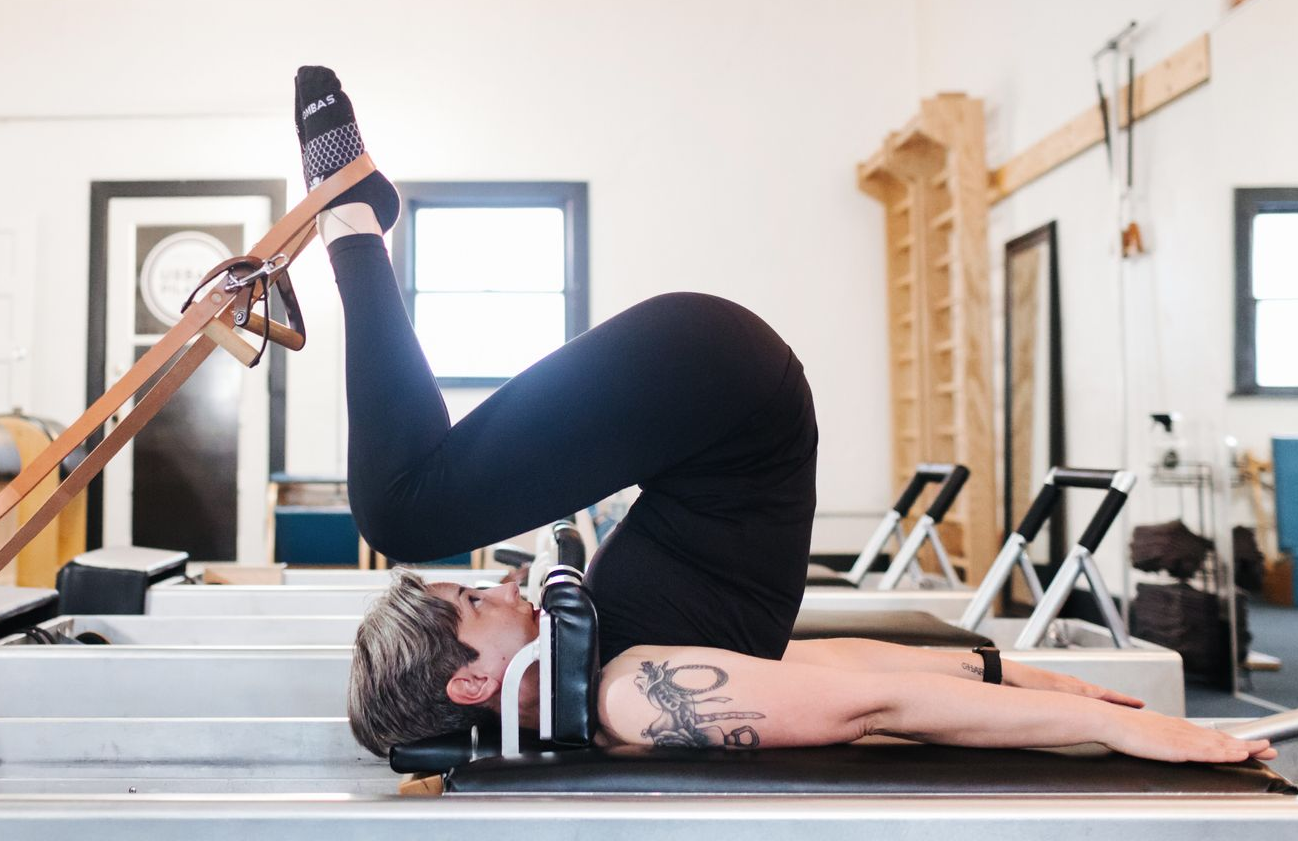
For many people, the Reformer is their first introduction to Pilates.

Its moving carriage, springs, straps, and footbar have become widely recognizable. But the Reformer is only one part of a much larger method.

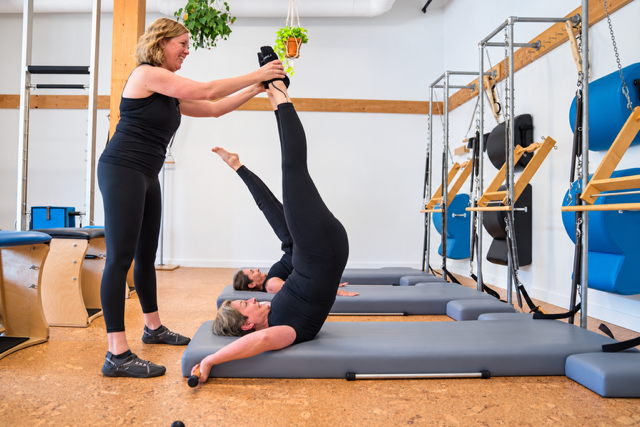
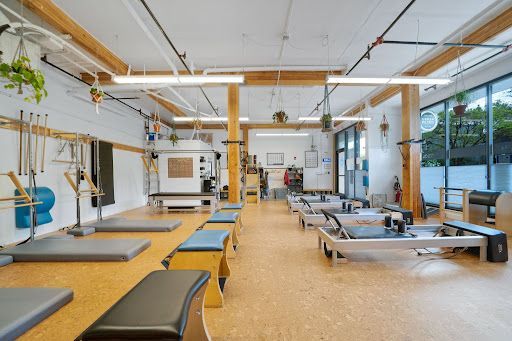
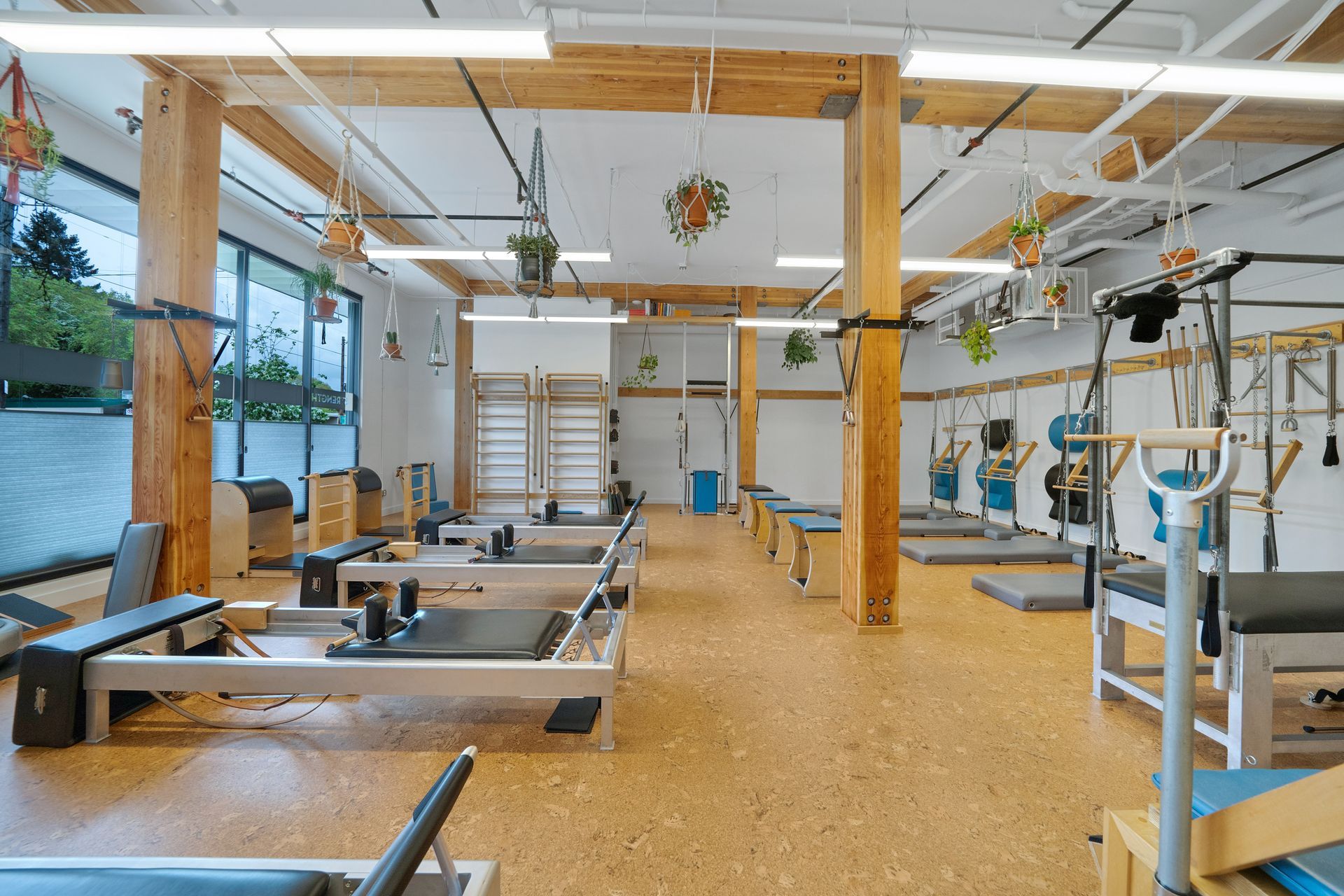
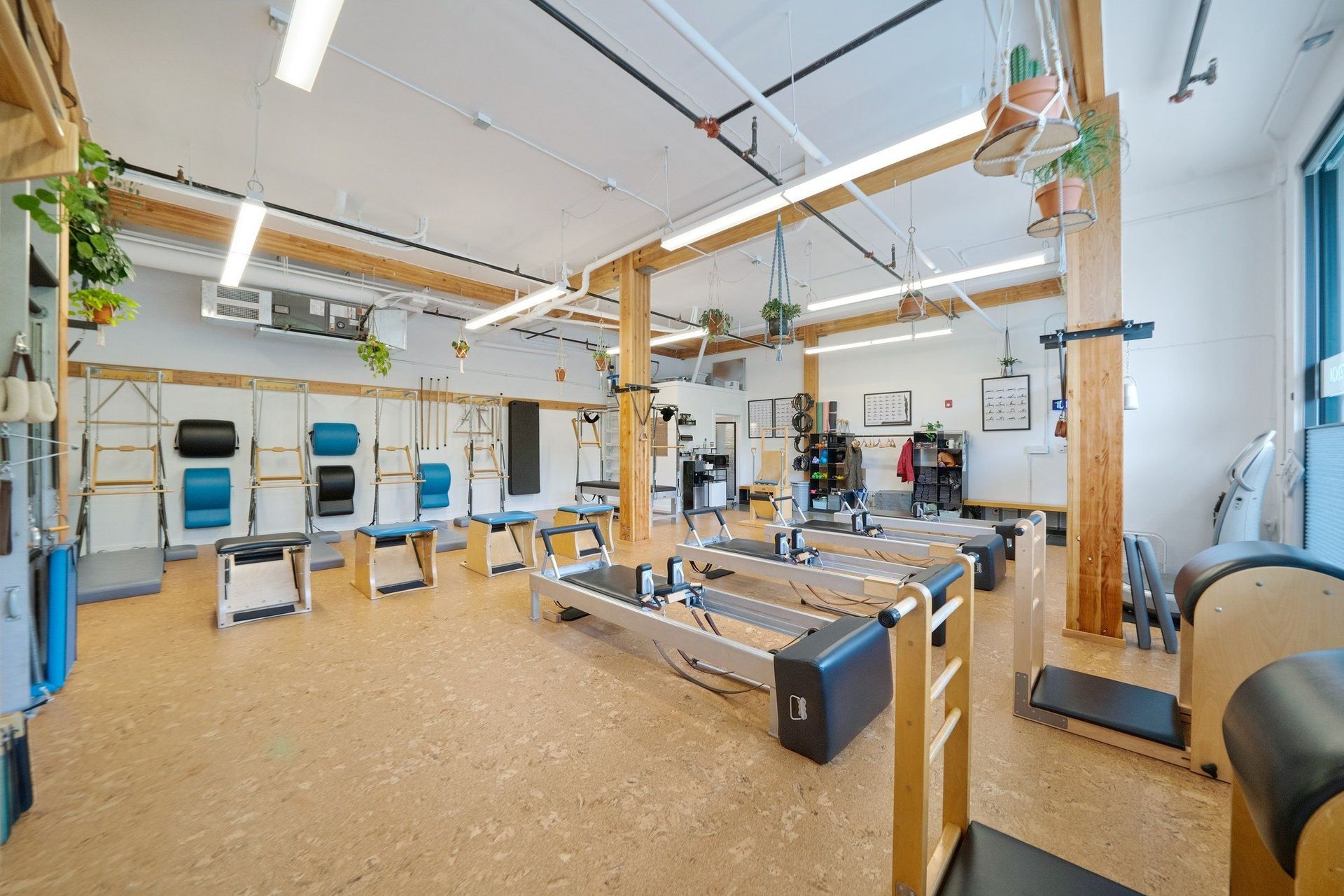
Classical Pilates includes the Mat, Reformer, Cadillac, Chairs, Barrels, Ped-o-Pul, and a variety of smaller apparatus. Each piece has a particular role, but none is intended to exist in complete isolation.

Joseph Pilates developed and patented multiple forms of exercise equipment, including an early Universal Reformer and an exercising Chair. His 1945 book Return to Life Through Contrology documented the original sequence of 34 Mat exercises. Together, the exercises and apparatus reflect the scope of the system he was building.

Classical Pilates is therefore not defined by one machine. It is an interconnected method in which the different parts educate and strengthen the body in complementary ways.


The Mat Is the Foundation

The Mat is sometimes considered the simpler or more accessible version of Pilates because it requires little equipment.

In reality, the Mat can be extremely demanding.

Without springs to support or guide the movement, the practitioner must organize the body against gravity. The exercises require control, coordination, flexibility, strength, and a clear connection to the powerhouse.

The Mat also contains many of the fundamental shapes and ideas that appear throughout the rest of the system.

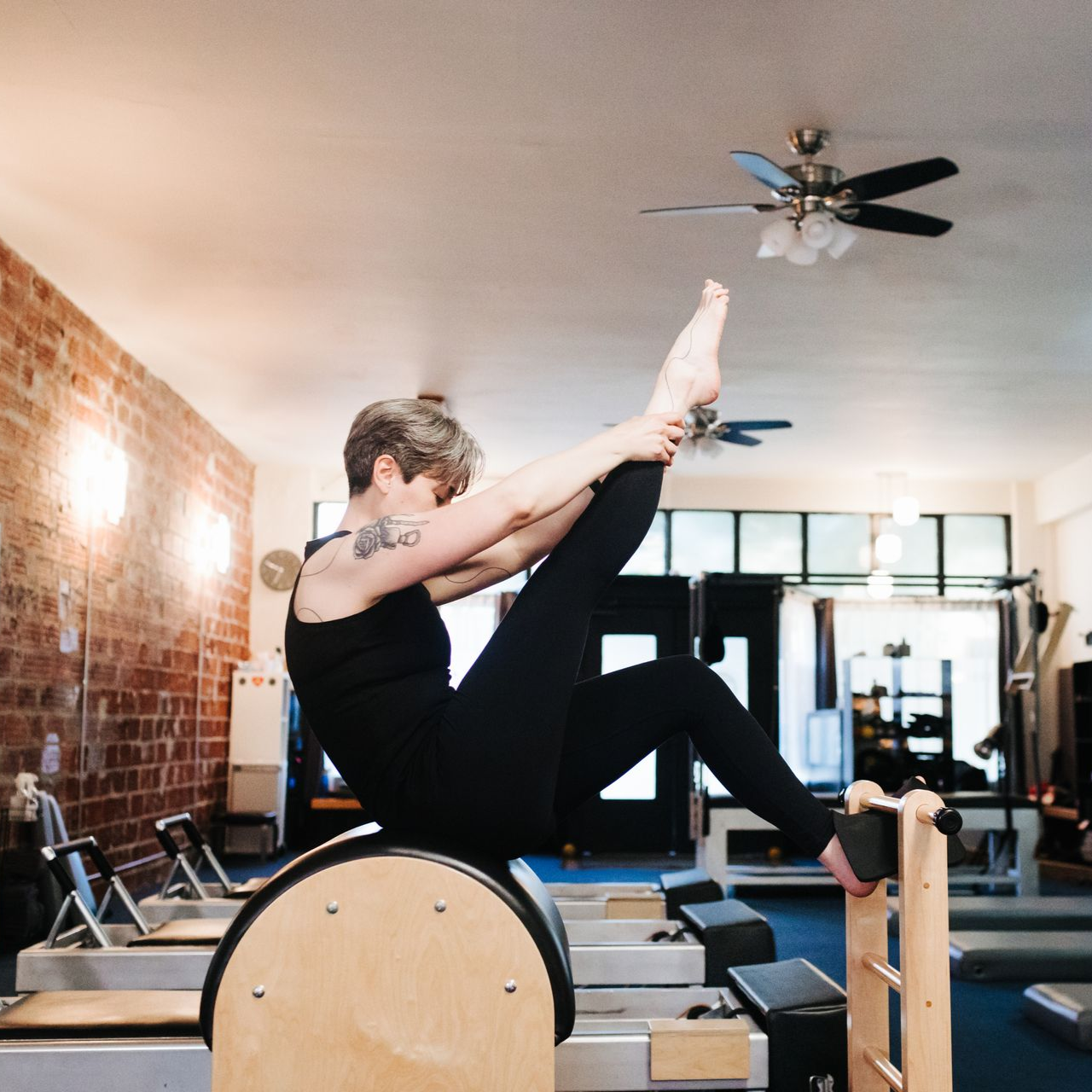
The Hundred, Roll Up, Roll Over, Swan, Teaser, and other Mat exercises are not sealed off in their own category. Their shapes, connections, and movement patterns reappear on the Reformer, Cadillac, Chairs, and Barrels.

Learning the Mat helps the student recognize the language of the method.


The Apparatus Both Supports and Challenges

The apparatus can make an exercise more accessible, but it can also make it more demanding.

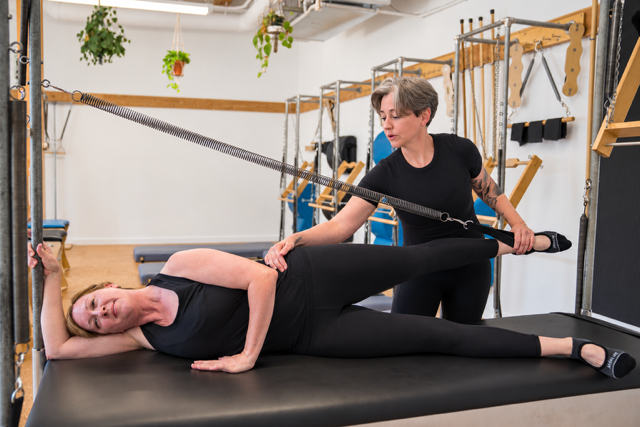
Springs may assist the body in finding a movement that is not yet possible without support. They can help a student understand spinal articulation, connect the arms into the back, or experience length through the legs.

The same springs can later increase the challenge.

They may require the student to control a moving surface, resist being pulled out of position, or maintain organization as the direction of force changes.

This is one of the great strengths of the Pilates apparatus. It does not have a single fixed purpose.

The equipment can support, resist, guide, destabilize, clarify, or challenge depending on the exercise, spring setting, and needs of the individual student.

Repeated Shapes Create Connections

Throughout Classical Pilates, the same shapes appear again and again.

A rounded shape practiced in Rolling Like a Ball may be recognized in the Stomach Massage Series. The reach and lift required in the Swan may reappear in Pull Straps/T-Straps or the Ladder Barrel. The coordination learned in the Hundred supports more advanced exercises in which the limbs extend away from the center.

These repetitions are not accidental redundancy.

Each appearance gives the student another opportunity to understand the shape under different conditions.

An exercise may be performed lying down, sitting, kneeling, standing, or moving on a carriage. Springs may assist the movement in one place and resist it in another. The base of support may become smaller, or the body’s relationship to gravity may change.

The idea remains recognizable, but the demand evolves.

Each Apparatus Offers a Different Lens

The various pieces of apparatus can be understood as different lenses through which the teacher and student examine the body.

The Reformer

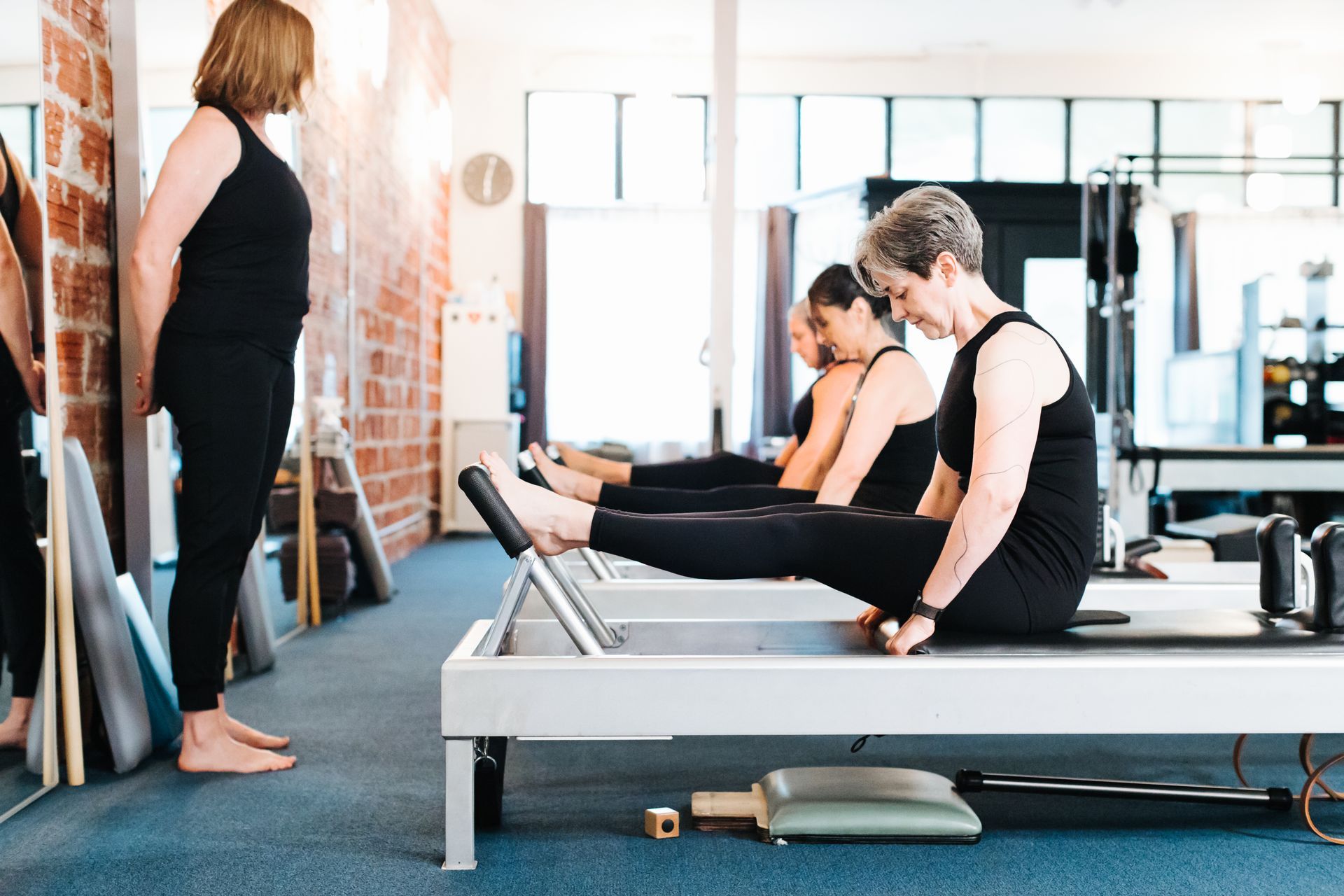
The Reformer teaches the student to control a moving carriage while responding to spring resistance. It makes rhythm, symmetry, and the quality of the return immediately visible.

The Cadillac

The Cadillac provides a stable surface and multiple spring arrangements. It can offer support, create traction, isolate a particular connection, or allow the student to explore movement with a different relationship to gravity.

The Chairs

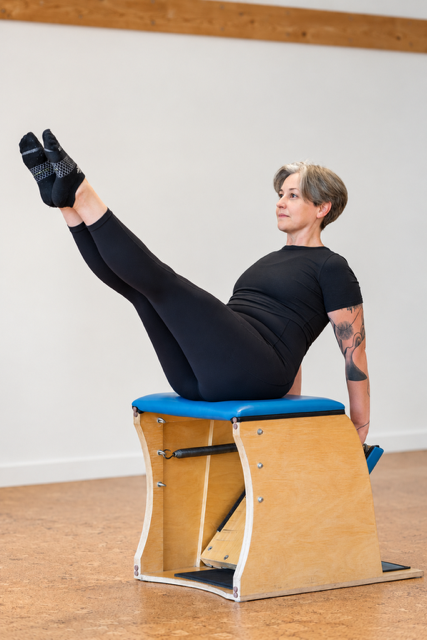
The Chairs are compact and powerful. Their smaller base of support and strong springs ask for clear centering, balance, and integration of the upper and lower body.

The Barrels

The Barrels support the curves of the spine and allow the body to explore flexion, extension, side bending, and opening. They can reveal where the spine moves freely and where it tends to avoid movement.

The Smaller Apparatus

The Ped-o-Pul, Foot Corrector, Toe Corrector, Magic Circle, and other smaller pieces may address a specific area, but their purpose remains connected to the whole body. Work with the feet, neck, hands, or breath is not treated as an isolated project. It is brought back into the larger organization of the person.

Each apparatus offers something distinct, but the principles governing the work remain consistent.


The System Helps the Teacher Individualize

Following a classical system does not mean giving every student the exact same session.

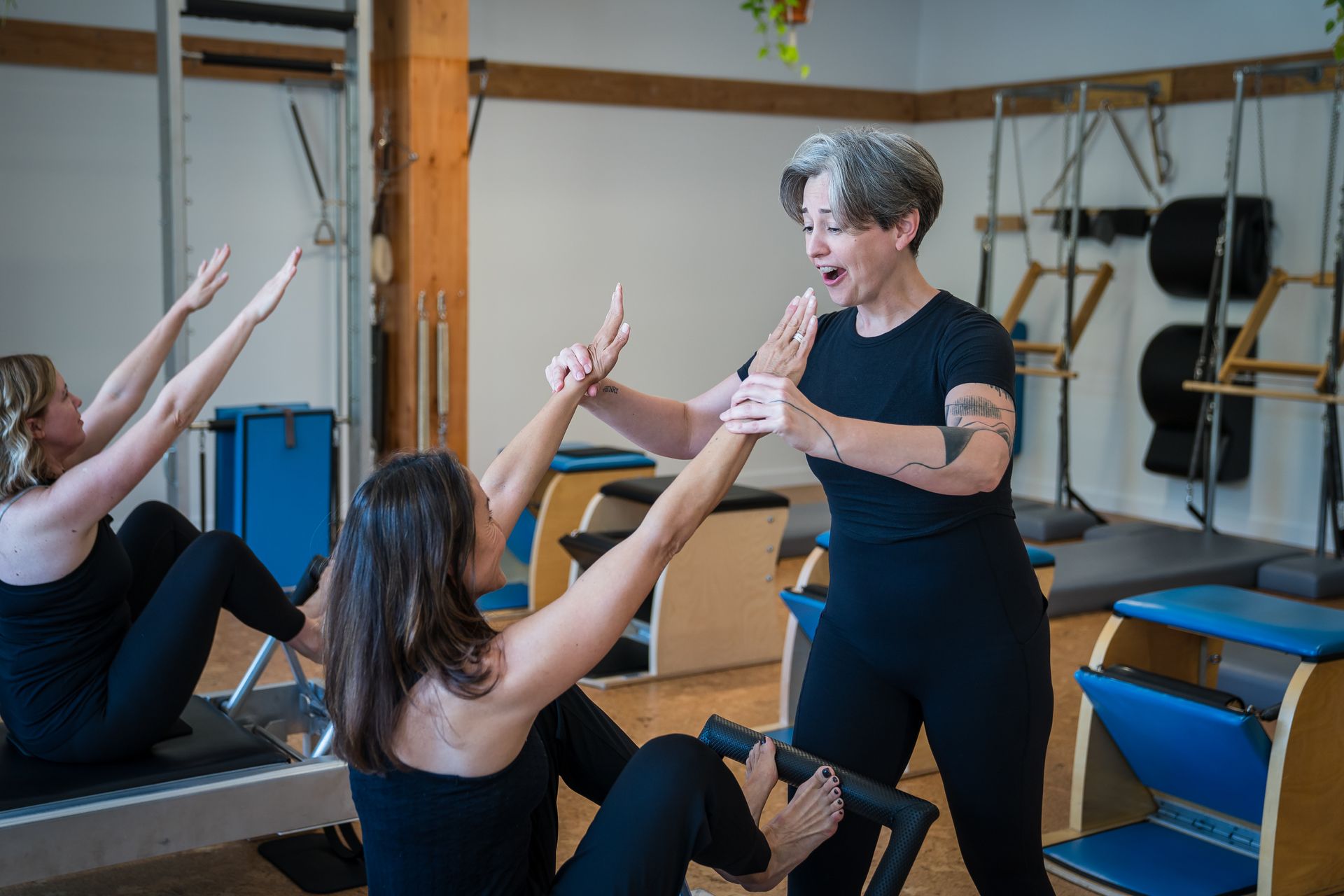
The established exercises, orders, and progressions give the teacher a shared structure. Within that structure, the teacher observes the individual and makes decisions.

One student may need the support of the Cadillac to understand an exercise before attempting it on the Mat. Another may need the challenge of the Chair to reveal a missing connection. A third may require a smaller apparatus to address the feet or neck so the larger exercises can improve.

The teacher is not inventing random exercises each week.

The teacher is selecting from a complete system and using its relationships to meet the student’s needs.

This is one reason comprehensive training matters. To teach the system well, an instructor must understand not only how to perform exercises on each apparatus, but how the exercises relate to one another.

The Apparatus Is Not a Collection of Stations

In some exercise settings, equipment is treated as a series of stations. One machine works the legs, another works the arms, and another works the abdominals.

The Classical Pilates apparatus does not divide the body in this way.

Every exercise should involve the whole body, even when a particular area receives additional attention.

Footwork on the Reformer is not simply a leg press. The Push Through on the Cadillac is not merely a stretch. Pumping on the Chair is not only an exercise for the knees.

Each movement asks the student to connect the part to the whole.

This is why changing apparatus does not mean abandoning one kind of work and beginning something unrelated. The student is continuing to study the same body through a different environment.

The Mat and Apparatus Teach One Another

What is learned on the apparatus should eventually strengthen the Mat, and what is learned on the Mat should inform the apparatus.

The springs may help a student discover the reach of the legs in the Roll Up. The student can then carry that understanding back to the Mat, where the same movement must be created without assistance.

A connection developed in the Mat may improve Footwork on the Reformer. An exercise on the Chair may reveal the lift needed for an advanced Reformer exercise.

Information travels throughout the system.

This is why practicing only one part of Pilates can limit the student’s understanding. The Reformer is valuable, but it is not the entire method. The Mat is foundational, but the apparatus can reveal and develop connections that are difficult to access through Mat work alone.

Together, they create a more complete education.

The Classical Method Preserves the Relationships

Classical Pilates is sometimes described simply as preserving Joseph Pilates’ original exercises.

The exercises matter, but preservation also includes the relationships among them.

The order, progressions, apparatus, transitions, and recurring movement patterns help the method function as a system. When these relationships are understood, the exercises become more than historical choreography.

They become a practical framework for teaching the body.

The system offers both structure and adaptability. It gives the student a clear path of development while giving the teacher many ways to address individual needs.

Discovering the System Over Time

The interconnected nature of Pilates is not always apparent during the first few sessions.

At first, the student is occupied with learning unfamiliar exercises and equipment. With repetition, recognizable patterns begin to emerge.

A shape from the Mat appears on the Reformer. A connection discovered on the Cadillac improves an exercise on the Chair. An instruction that once seemed specific to one movement begins to apply throughout the practice.

The system gradually reveals itself.

That discovery is part of what makes Classical Pilates endlessly engaging. The exercises may be established, but the relationships among them continue to deepen.

Experience the Complete Method

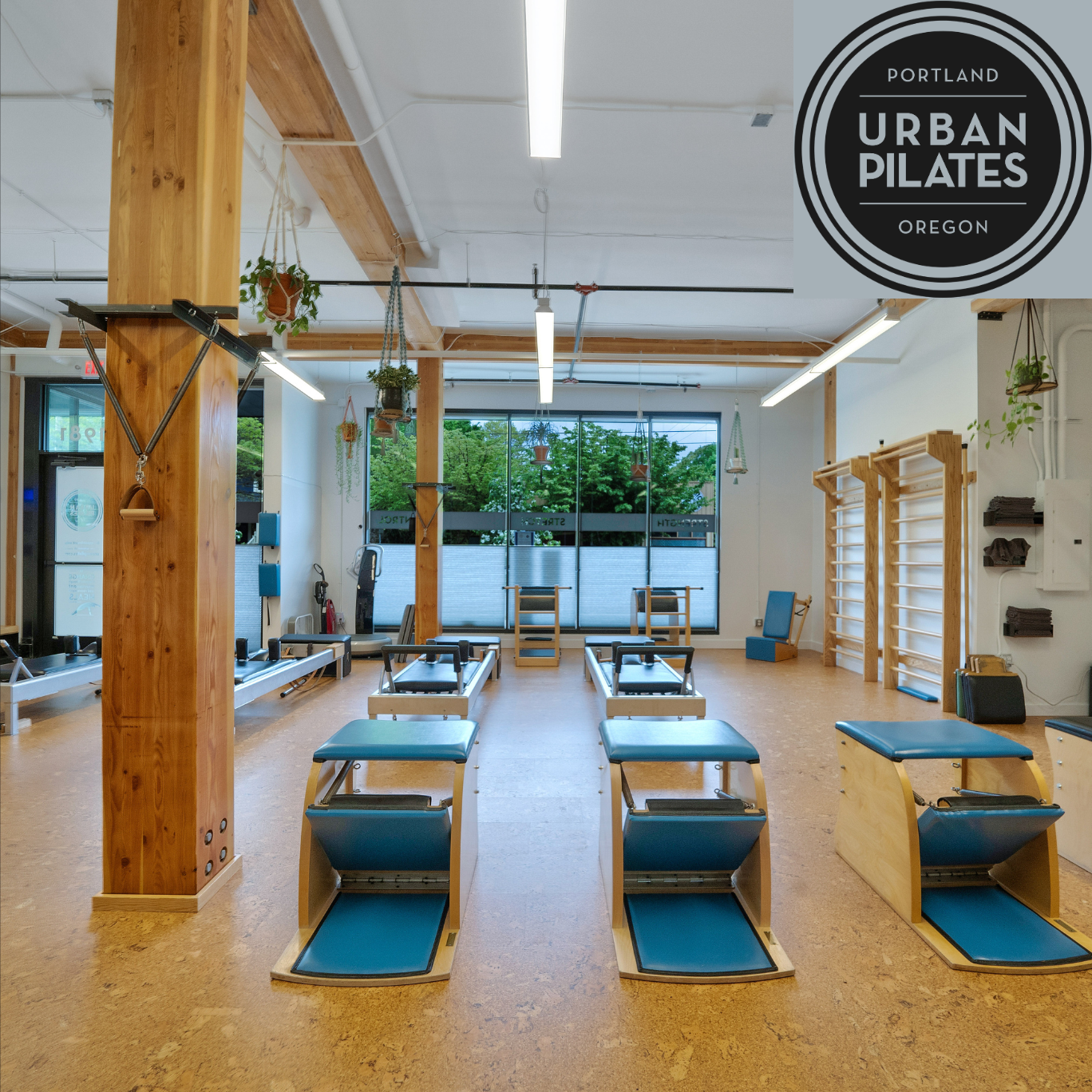
The interconnected nature of Classical Pilates becomes clearer when you have the opportunity to work across the full studio. A private session allows your teacher to move between the Mat and apparatus with purpose, using one exercise to clarify another and selecting the equipment that best supports what your body needs that day.

Over time, these connections begin to reveal themselves. A shape learned on the Cadillac may improve your Mat work. An exercise on the Chair may deepen your understanding of something you first encountered on the Reformer. What once felt like separate pieces gradually becomes one coherent method.

To experience the full Classical Pilates system, schedule a private session at urban-pilates.com/schedule or book through the Urban Pilates PDX app.


Recent Posts

By Dori Lea • October 27, 2026
Three Qualities That Work Together
By Dori Lea • October 13, 2026
What Is the Powerhouse?
By Dori Lea • September 30, 2026
Why Joseph Pilates Called His Method Contrology
By Dori Lea • September 16, 2026
Breath Is Part of the Movement
By Dori Lea • August 28, 2026
Movement Begins with Attention
By Dori Lea • August 18, 2026
What Makes Classical Pilates Different? Classical Pilates is often described through a familiar group of principles: concentration, control, centering, precision, breath, and flow. These words help us understand the method, but they are not separate techniques that can be added to an exercise one at a time. They are qualities that must work together throughout the entire practice. Joseph Pilates originally called his method Contrology , which he defined as the complete coordination of the body, mind, and spirit. His intention was not simply to create a collection of strengthening exercises. He developed a comprehensive system designed to organize the body, sharpen the mind, improve physical function, and help people move through everyday life with greater vitality. That larger philosophy is at the heart of Classical Pilates.
By Dori Lea • July 23, 2026
The Language of Classical Pilates
By Dori Lea • July 15, 2026
What is Classical Pilates? A Complete Guide to the Original Method
By Dori Lea • June 29, 2026
Separating Fitness Trends from the Classical Method
By Dori Lea • June 18, 2026
How Often Should You Practice Pilates? A Beginner's Guide to Building a Sustainable Practice
Show More