Precision, Rhythm, and Flow in Classical Pilates
Three Qualities That Work Together
Precision, rhythm, and flow are often discussed as separate Pilates principles. In practice, they are closely connected.
Precision gives an exercise clarity. Rhythm gives it timing. Flow connects it to what came before and what follows.
When these qualities work together, a Pilates session becomes more than a sequence of individual movements. It develops continuity and purpose.
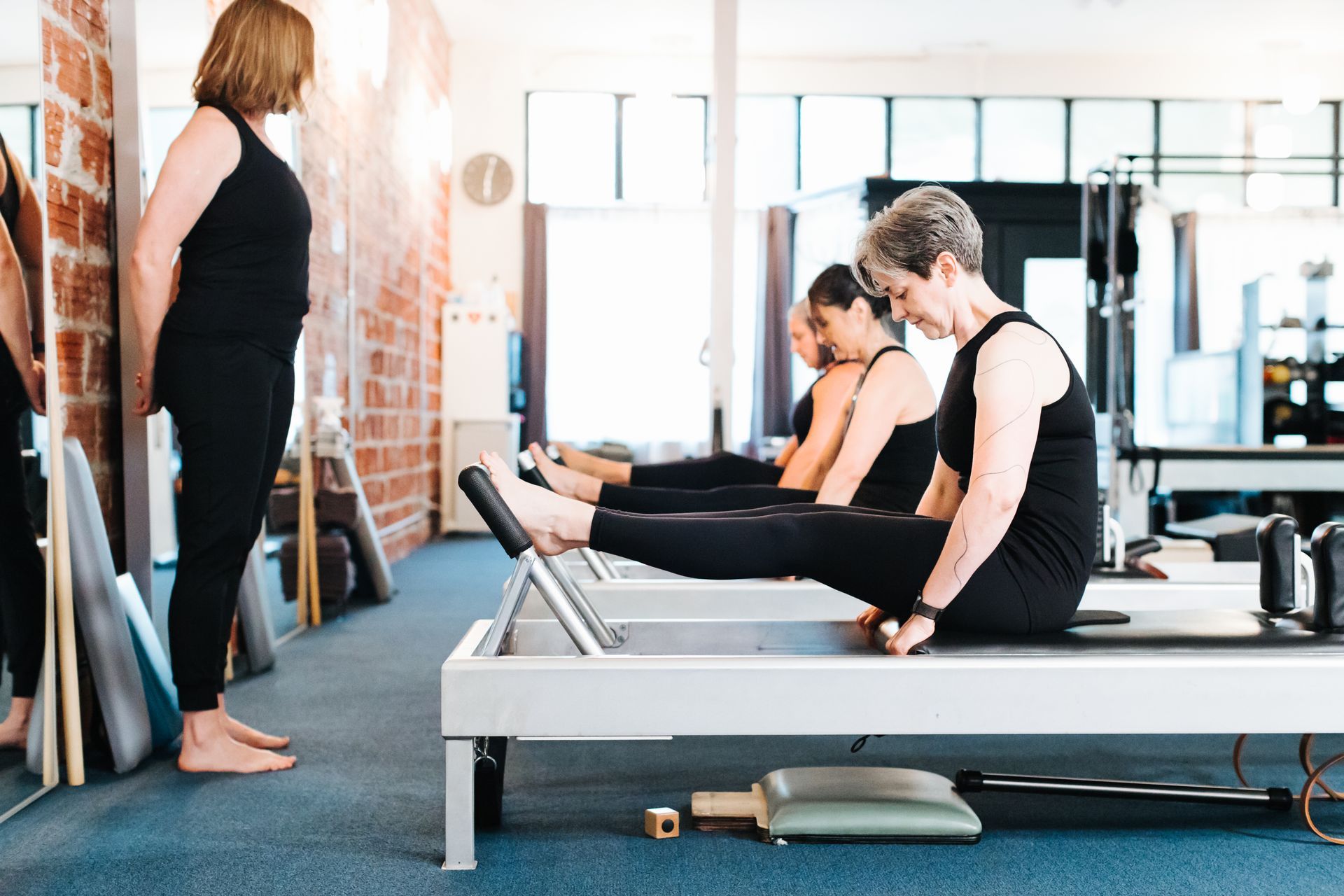
This does not mean the session must be fast or performed without pauses. Precision, rhythm, and flow develop gradually. A beginner may need time to learn the setup, understand the springs, and receive corrections. As the exercises become familiar, unnecessary pauses can fall away and the work begins to move.
Precision Is More Than Perfect Placement
Precision is sometimes mistaken for creating an exact visual position.
The shape of an exercise matters, but precision is not merely cosmetic. It is connected to the purpose of the movement.
Where are the hands placed, and why? What is the direction of the legs? How far should the carriage travel? Where does the movement begin, and where should it finish?
These details determine which connections the exercise can teach.
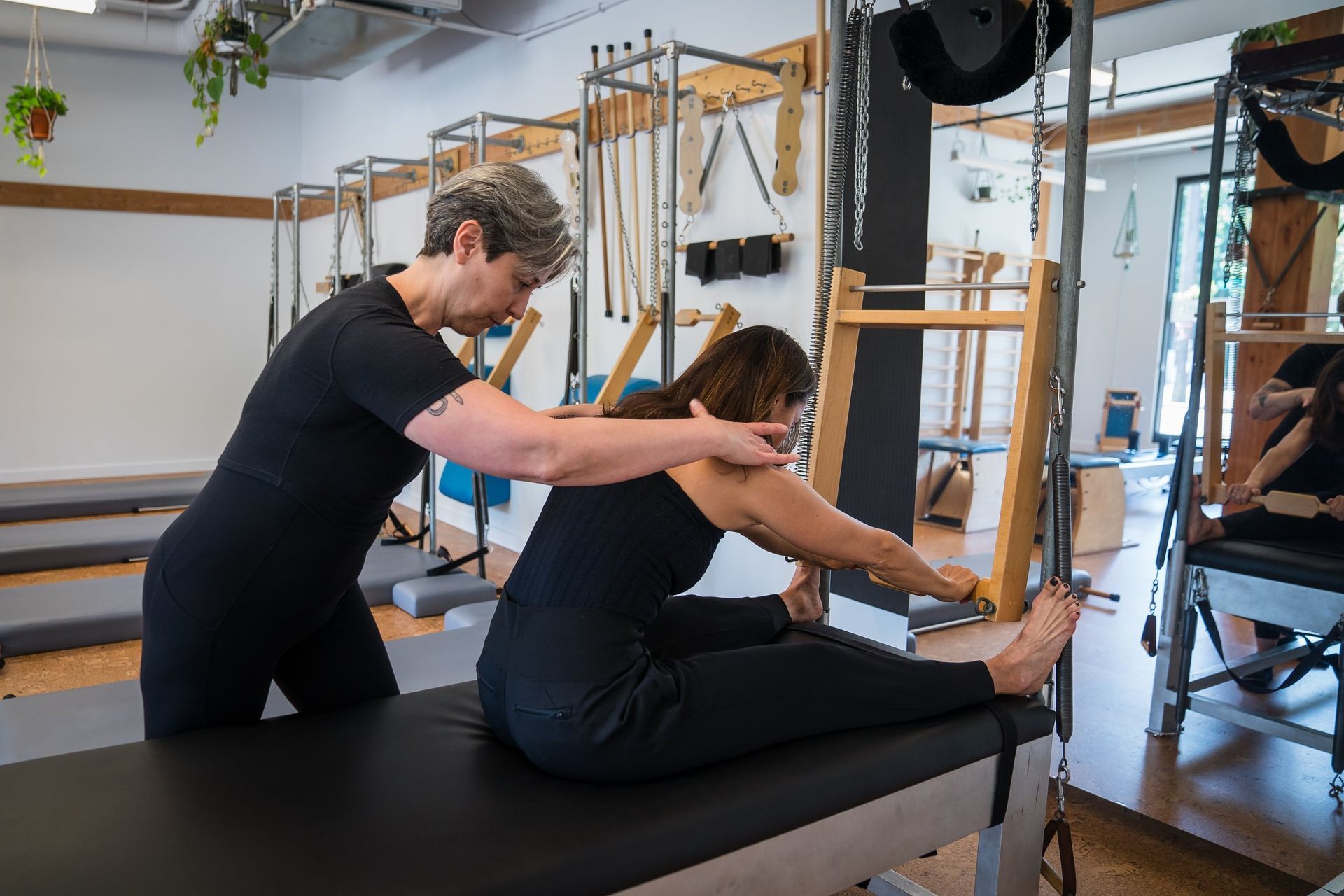
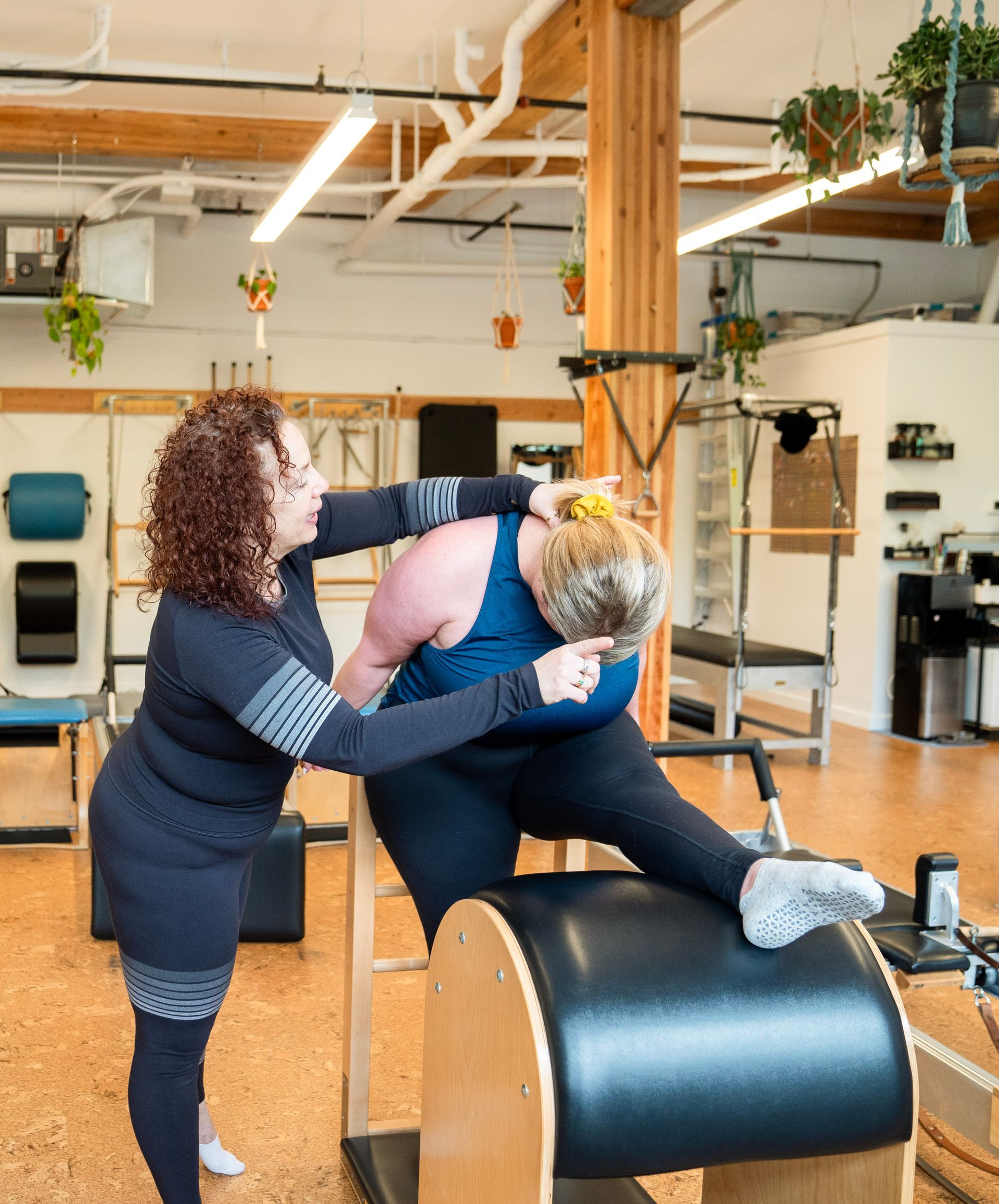
A small change in placement may completely alter the work. Feet positioned carelessly on the footbar may disconnect the legs from the seat. Hands placed too widely may make it difficult to organize the shoulders. A carriage that travels farther than the body can control may change a centered exercise into a strained one.
Precision protects the intention of the exercise.
Precision Without Rigidity
Precision does not require the body to become stiff.
An exercise can be exact and still feel alive.
In fact, too much effort to make a position perfect may interrupt the movement. The student may grip the muscles, restrict the breath, or become afraid to move beyond the setup.
The purpose of precision is to make movement clearer, not smaller.
A precise exercise has a recognizable shape, direction, and rhythm. The student understands what is moving, what is supporting the movement, and how the exercise should be completed.
The details serve the whole.

Rhythm Gives the Exercise Its Character
Every Pilates exercise has a rhythm.
Some movements are smooth and sustained. Others are brisk and energetic. Some contain a deliberate suspension or change of direction. The rhythm may be supported by the breath, the movement of the springs, or the natural structure of the exercise.
Rhythm helps prevent the work from becoming mechanical.
Without rhythm, the exercise may turn into a collection of disconnected positions. The student reaches one shape, stops, assembles the next shape, and starts again.
With rhythm, those positions become parts of one movement.
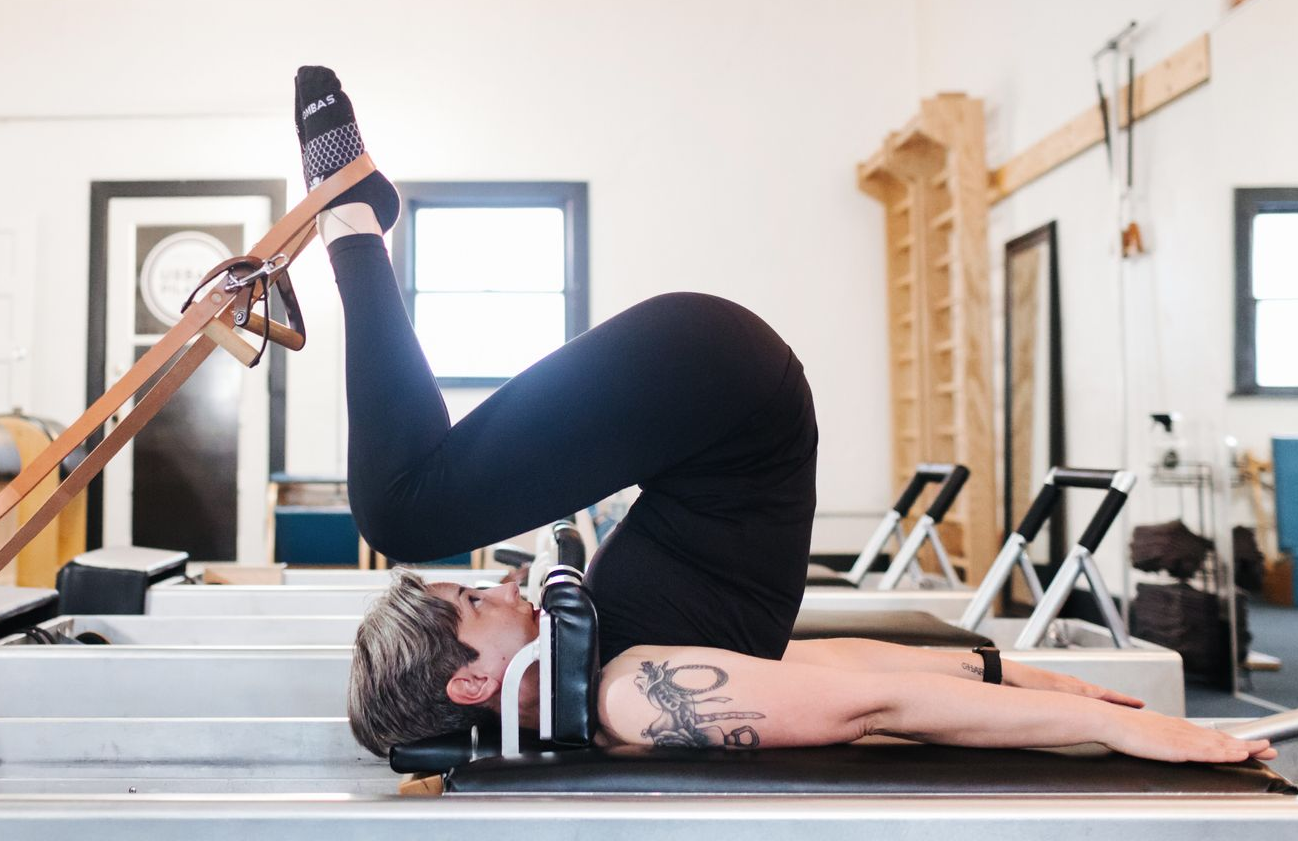
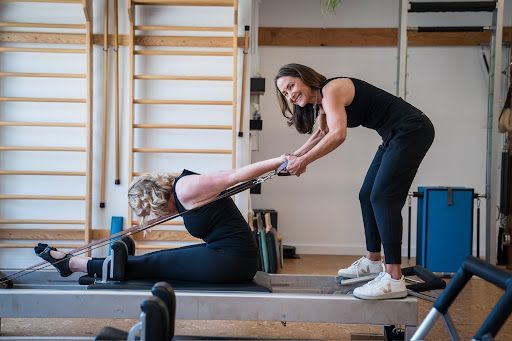
The Roll Up is not simply lying down, sitting up, and reaching forward. It is a continuous articulation of the spine with a clear direction and tempo. Footwork is not a series of unrelated presses. It is a repeated pattern in which the carriage moves out and returns with consistency.
Rhythm gives the exercise life.
Rhythm Is Not the Same as Speed
Moving quickly does not automatically create rhythm.
A hurried exercise may skip the very connections it is intended to develop. The carriage may slam, the breath may disappear, and the body may rely on momentum rather than control.
Moving slowly does not guarantee control either. An exercise can become so slow that it loses energy and direction.
The appropriate tempo is the one that allows the student to maintain the shape, purpose, and coordination of the movement.
As proficiency develops, the tempo may naturally become quicker. The student no longer needs to stop and reconstruct the exercise at every stage. Greater understanding creates greater continuity.
Speed is an outcome of familiarity and control, not a substitute for them.
What Flow Means in Classical Pilates
Flow is sometimes described as moving smoothly, but it has a broader meaning within the classical method.
Flow exists within the exercise and between exercises.
Within an exercise, the movement continues without abrupt starts, collapses, or unnecessary hesitation. Between exercises, the student transitions efficiently, preparing the apparatus and the body for what comes next.
The classical order supports this continuity.
One exercise prepares the body for another. A spinal shape may appear in several different contexts. The work of the legs may be followed by an exercise that asks the student to carry that connection into the trunk. A demanding section may be balanced by movement in another direction.
Flow allows the method to be experienced as a sequence rather than a pile of separate tasks.
Transitions Are Part of the Practice
A transition is not empty time between the important exercises.
It is part of the work.
How does the student step onto the Reformer? Can the springs be changed efficiently? Can the body turn, kneel, sit, or stand without losing awareness?
Careful transitions maintain the concentration and rhythm of the session. They also teach practical coordination. The student must organize the body in less formal positions and apply the principles outside the boundaries of a named exercise.
This does not mean transitions must be elaborate or theatrical. The best transition is often the simplest one that safely and logically connects the work.
As the student becomes more experienced, the transitions become increasingly economical.

Flow Must Be Earned
Flow should not be imposed before the student understands the exercises.
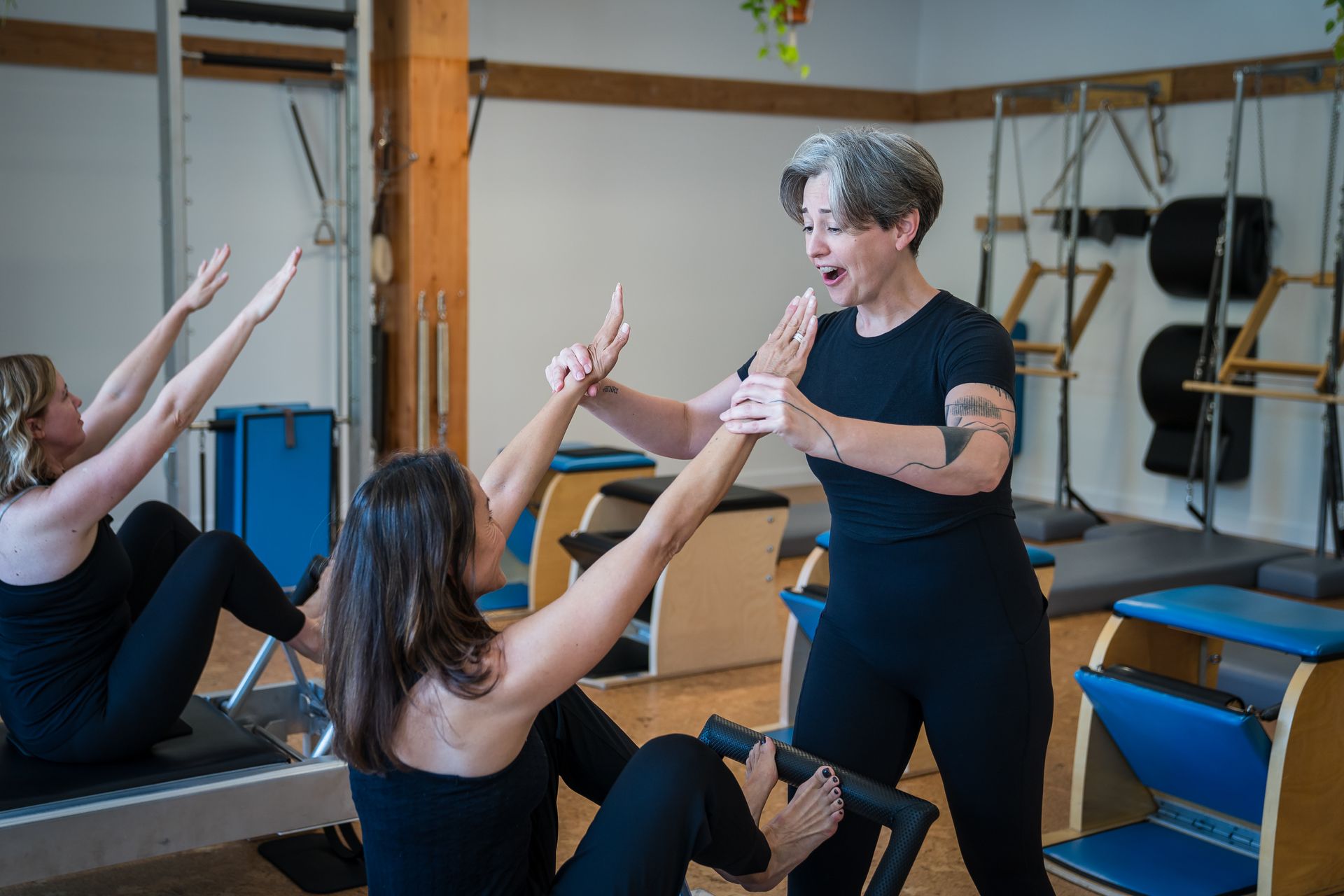
A beginner may need to pause frequently. The teacher may stop to explain the setup, correct an alignment, or introduce the next movement. These pauses are not failures of flow. They are part of the learning process.
Over time, the teacher can say less and the student can do more.
The order becomes familiar. The student remembers the spring settings and transitions. The body recognizes the recurring shapes. The session begins to gather momentum.
This is one of the rewards of consistent practice. What once felt like a complicated series of instructions gradually becomes a coherent physical language.
When Precision, Rhythm, and Flow Meet
Precision without rhythm may feel stiff.
Rhythm without precision may become careless.
Flow without control may become rushed.
Together, these qualities create movement that is deliberate without being labored, energetic without being chaotic, and exact without becoming rigid.
This balance is one of the distinguishing qualities of a mature Classical Pilates practice.
The practitioner is not merely remembering the exercises. The exercises have begun to relate to one another, and the session develops an arc from beginning to end.
A Session With Purpose
The goal of flow is not to race through the largest possible number of exercises.
A flowing session may include fewer exercises performed with stronger connections. What matters is that the work has continuity and that each exercise contributes to the larger direction of the session.
The teacher must therefore consider more than individual exercises.
What does the student need today? Which exercises will prepare the body? Where should the pace increase, and where should it slow down? Which transitions will maintain the thread of the work?
Flow is not the absence of teaching. It is the result of thoughtful teaching and increasingly independent practice.

Experience the Rhythm of the Method
Rhythm and flow cannot be rushed. They develop as the exercises become more familiar, the transitions become more natural, and the student begins to understand how each part of the session prepares the body for what comes next.
Through private instruction, your teacher can help you find the appropriate pace for your practice: slowing down when greater precision is needed, allowing the movement to gather momentum when the connections are secure, and shaping the session so that it unfolds with purpose rather than feeling like a series of unrelated exercises.
Over time, the pauses begin to fall away. The work becomes more continuous, and the method can be felt as a whole.
Discover the rhythm of Classical Pilates by scheduling a session at urban-pilates.com/schedule or through the Urban Pilates PDX app.
Recent Posts