Centering and the Powerhouse in Classical Pilates
What Is the Powerhouse?
The word powerhouse is central to the language of Classical Pilates, but it is often translated too simply as “the core.”
The powerhouse is not one muscle, and it is not limited to the visible abdominal wall. It describes the central support from which the body is organized and movement is coordinated.
Depending on the exercise and the teaching context, this may include the abdominal muscles, back, pelvis, hips, seat, and inner thighs working together. More important than drawing a precise anatomical border is understanding the function of the powerhouse.
The powerhouse connects the upper and lower body. It supports the spine. It helps stabilize the body while the limbs move. It creates the strength and organization needed for movement to travel outward without losing the center.
Movement From the Center
In Classical Pilates, movement is generally organized from the center outward.
This does not mean the center must visibly initiate every action. The arms may reach, the legs may press, or the spine may extend, but those movements should remain connected to the central support of the body.
Consider the Hundred.
The arms pump vigorously and the legs may be extended into space, but the exercise cannot be reduced to moving the arms or holding the legs up. The powerhouse must support the position of the trunk and connect the movement of the limbs into one coordinated whole.
The same principle applies in standing work. When the center is organized, the legs can push into the floor without the trunk collapsing. The body can move over the feet while maintaining lift and control.
Centering gives the movement a source.

The Powerhouse Is More Than Bracing
Centering is sometimes confused with tightening the abdomen as strongly as possible.
Excessive bracing may make the body feel secure, but it can also restrict the breath, flatten the movement of the spine, and create tension in the hips, shoulders, or neck.
The powerhouse must be responsive.
It should be able to support flexion, extension, rotation, side bending, balance, and changes in direction. A center that can only hold one rigid position is not fully prepared for movement.
The aim is not to harden the middle of the body. It is to develop support that can adjust to the demands of each exercise.
Sometimes the powerhouse works to hold the trunk steady while the limbs move. Sometimes it helps articulate the spine. Sometimes it creates lift. Sometimes it controls the body against gravity or the pull of the springs.
Its role changes, but its connection remains.
Centering and Two-Way Movement
Classical Pilates often involves a sense of movement traveling in more than one direction at once.
The legs may reach away as the center draws inward and upward. The arms may press down as the spine lifts. The seat may anchor while the crown of the head lengthens in the opposite direction.
This opposition creates space and support.
Without it, centering can become compression. The student may pull everything toward the middle and become smaller. When centering is balanced by reach and length, the body becomes more expansive.
The powerhouse does not gather the body into a tight knot. It creates a stable center from which the body can move outward.
How the Apparatus Reveals the Center
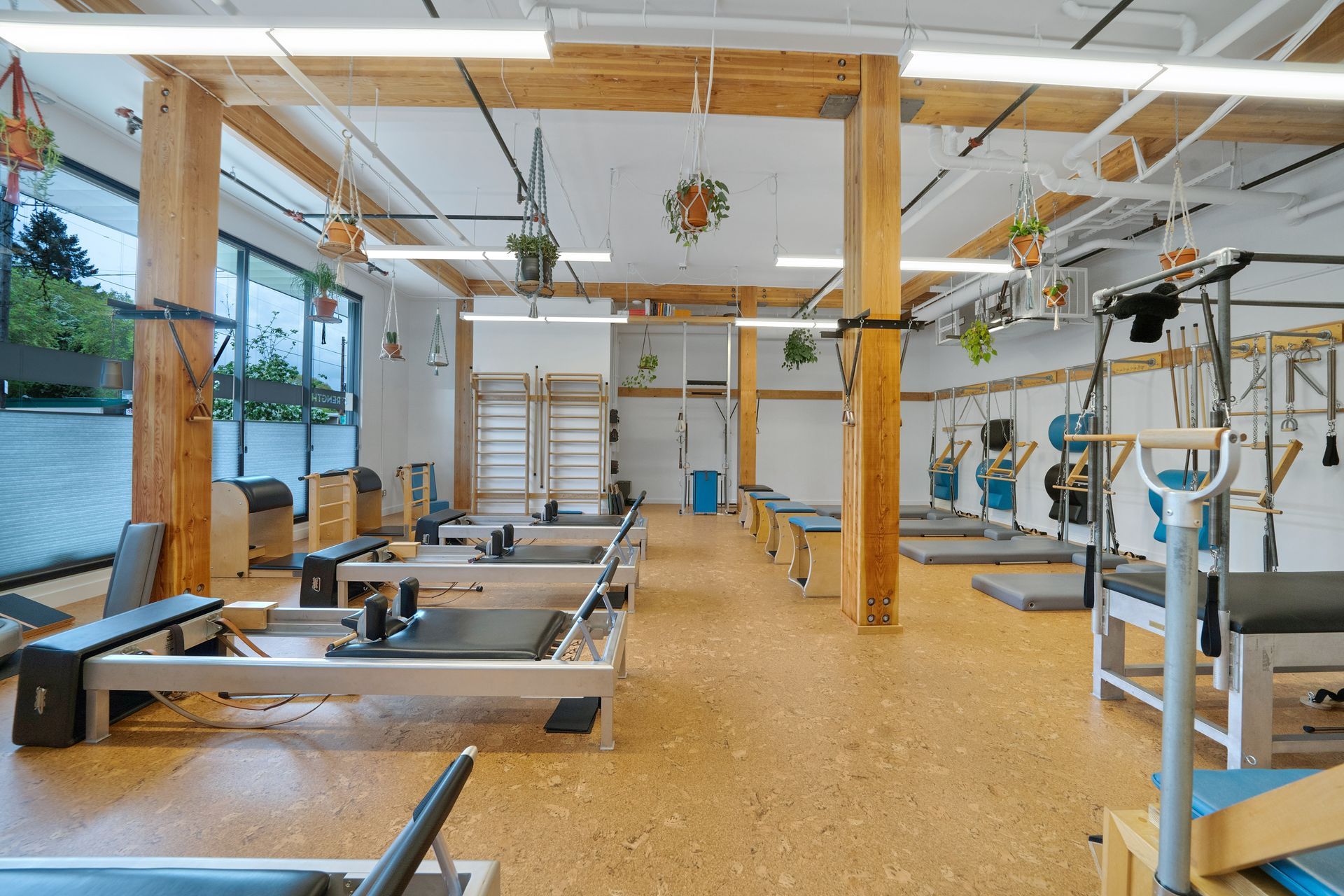
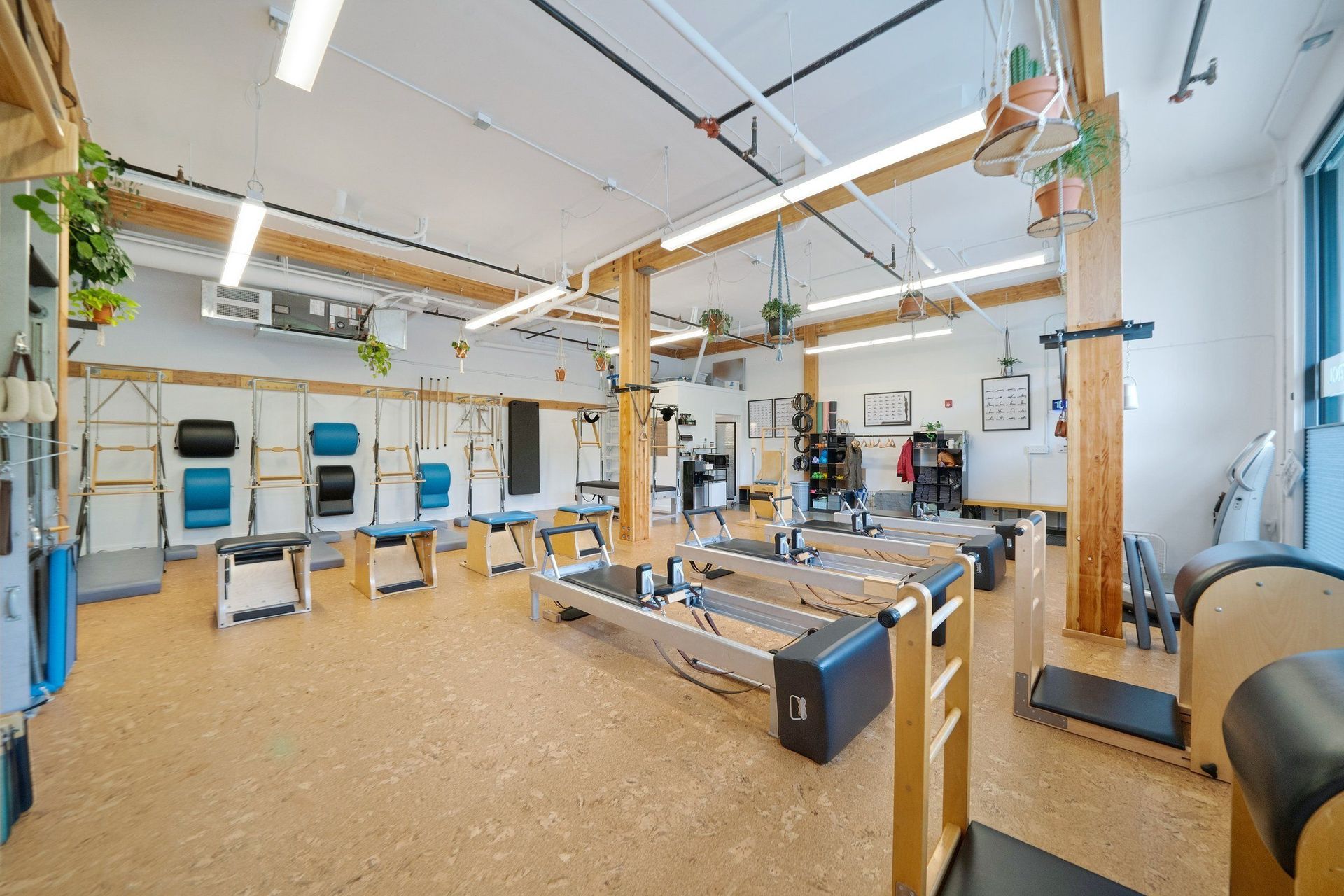
Each piece of Classical Pilates apparatus offers a different way to understand centering.
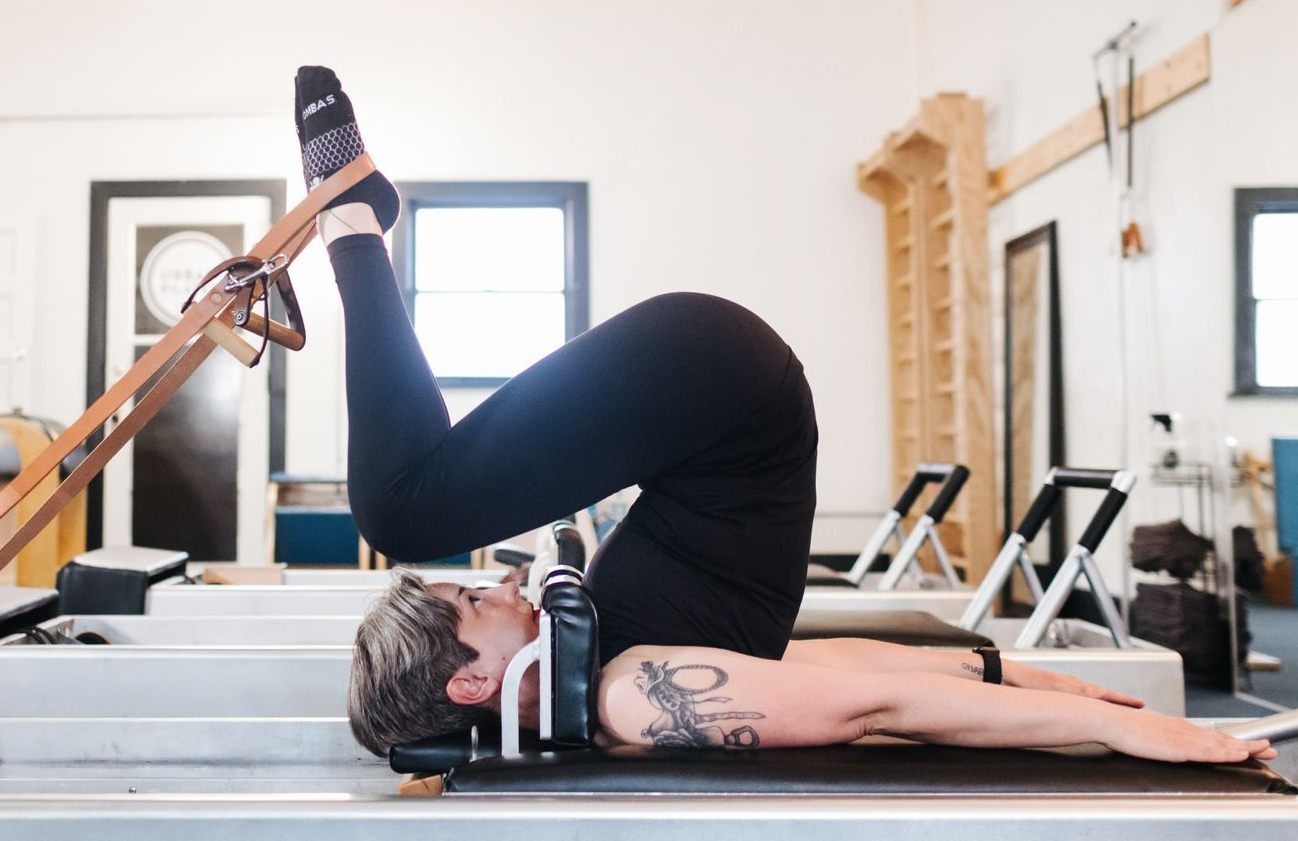
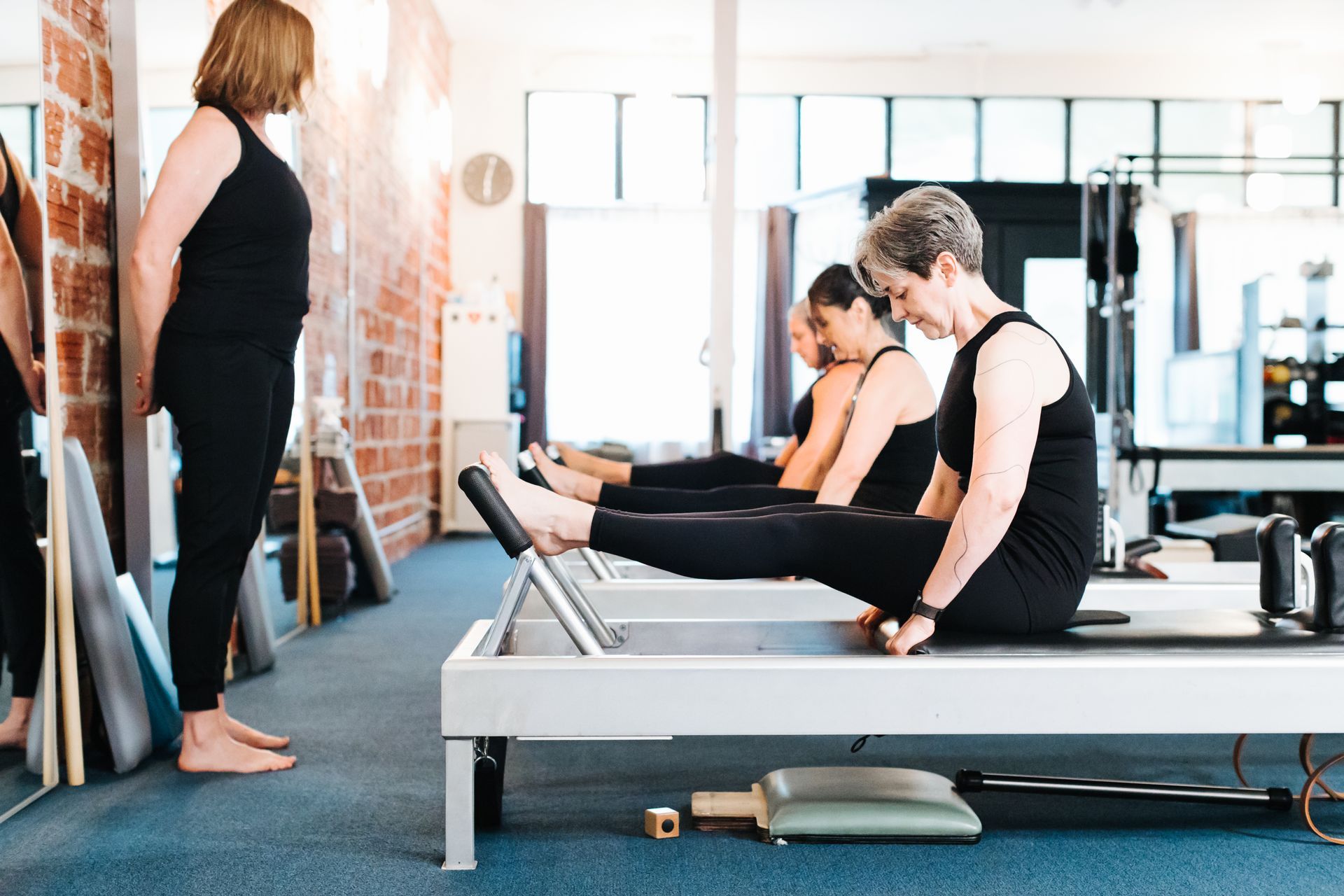
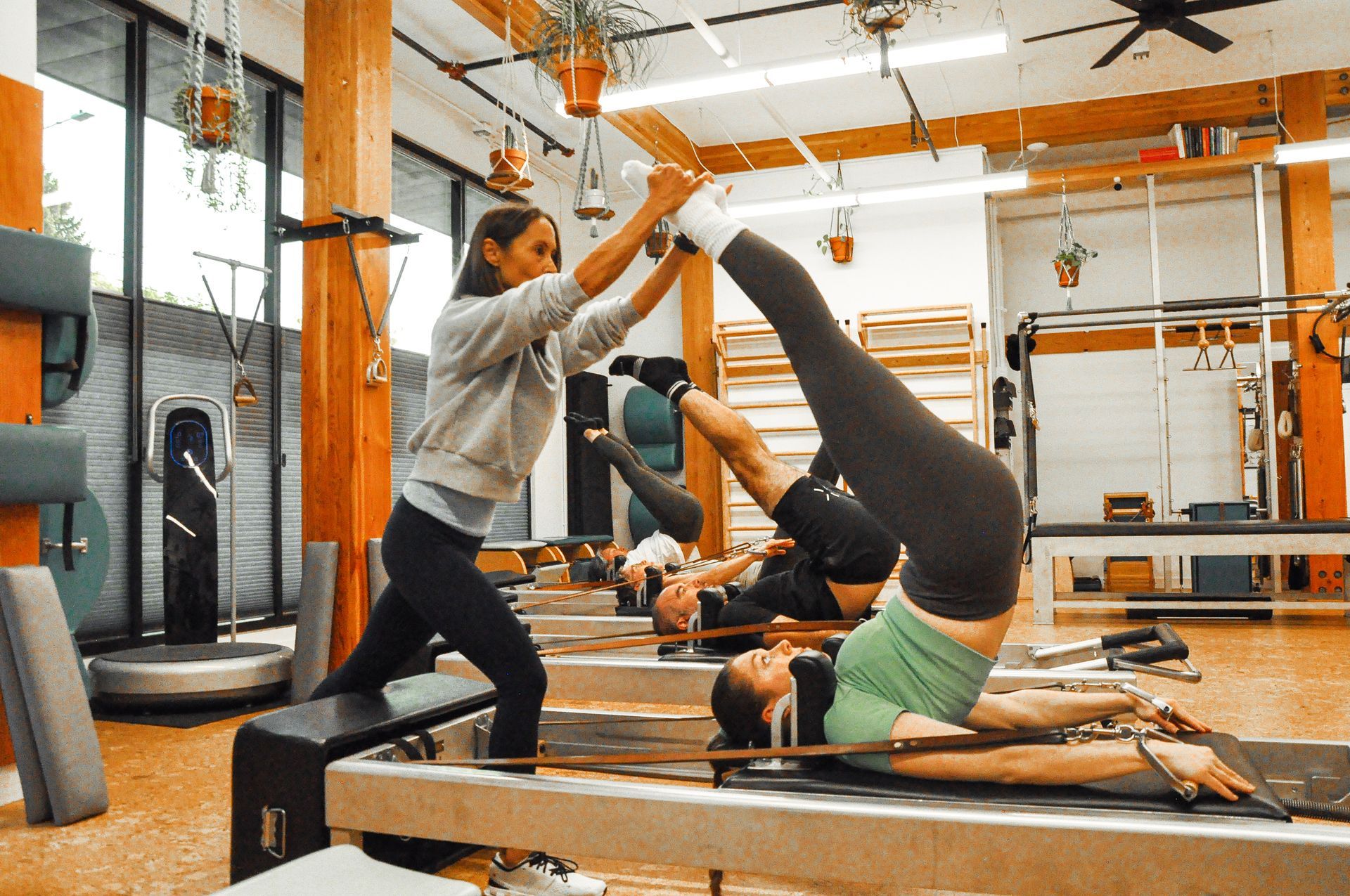
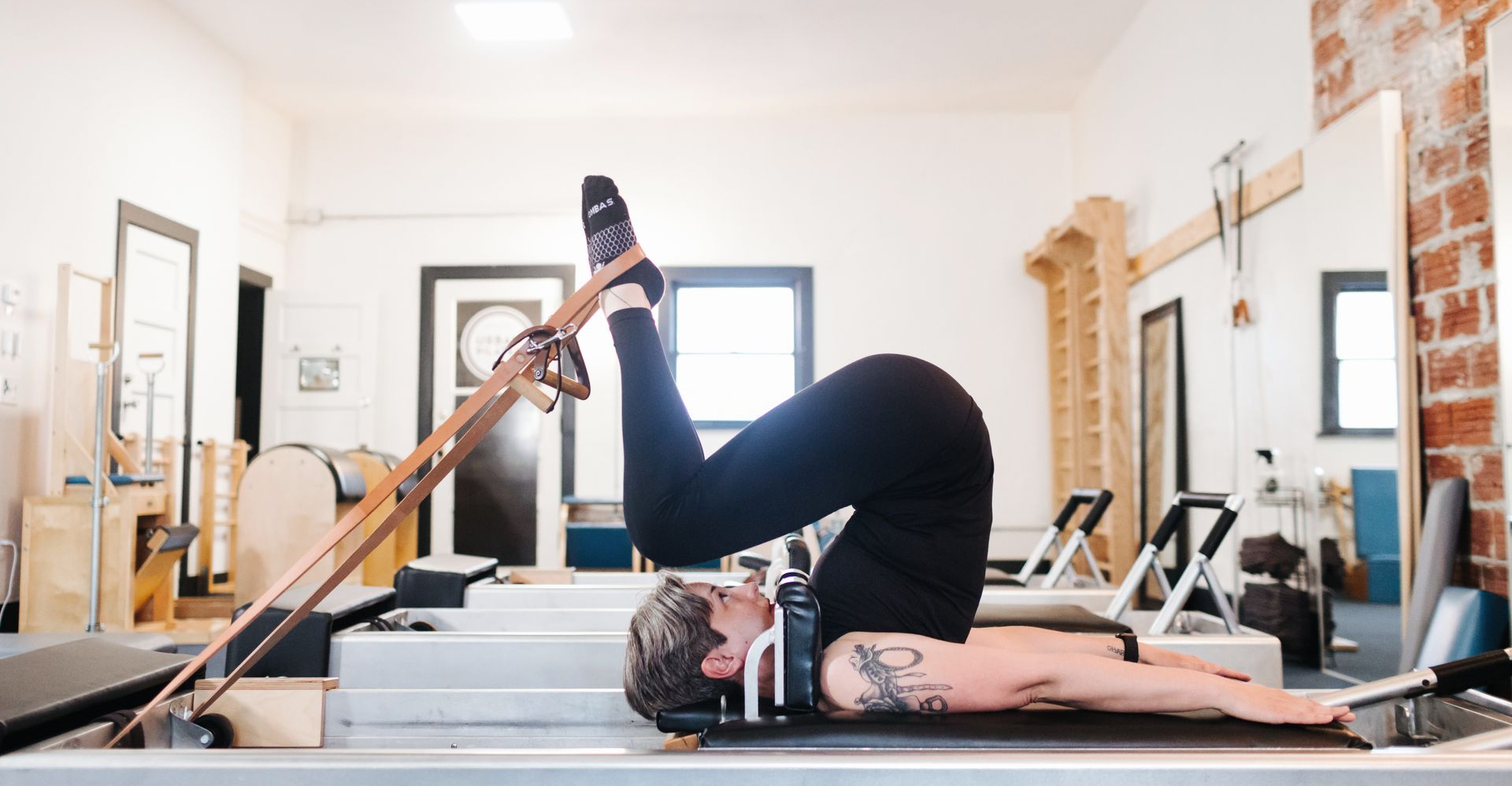
On the Reformer, the moving carriage reveals whether the body can remain organized while the springs change length. If the center loses its connection, the carriage may move unevenly or return without control.
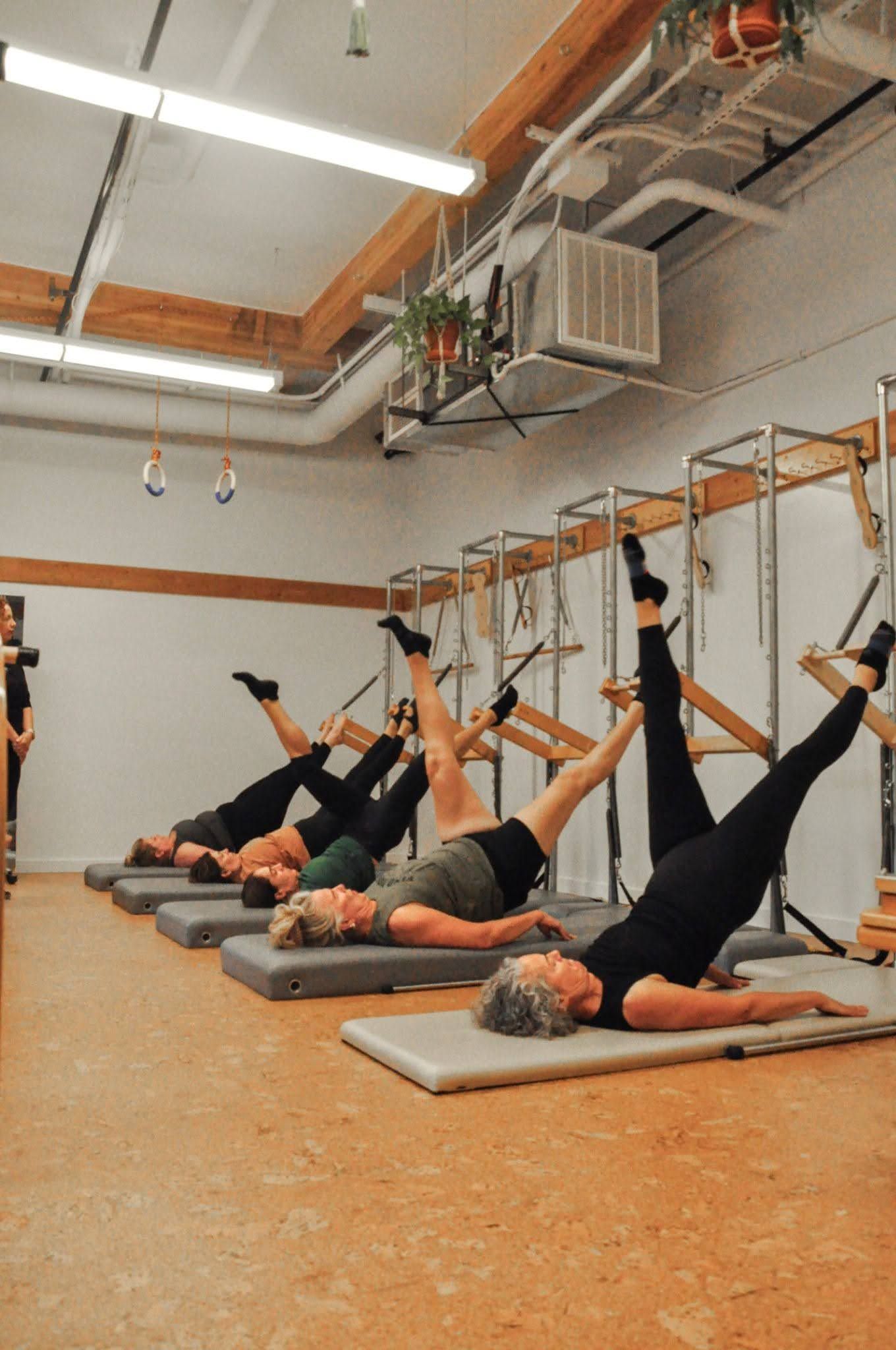
The Cadillac offers greater stability, which can help a student feel spinal articulation, opposition, or the relationship between the limbs and the trunk.
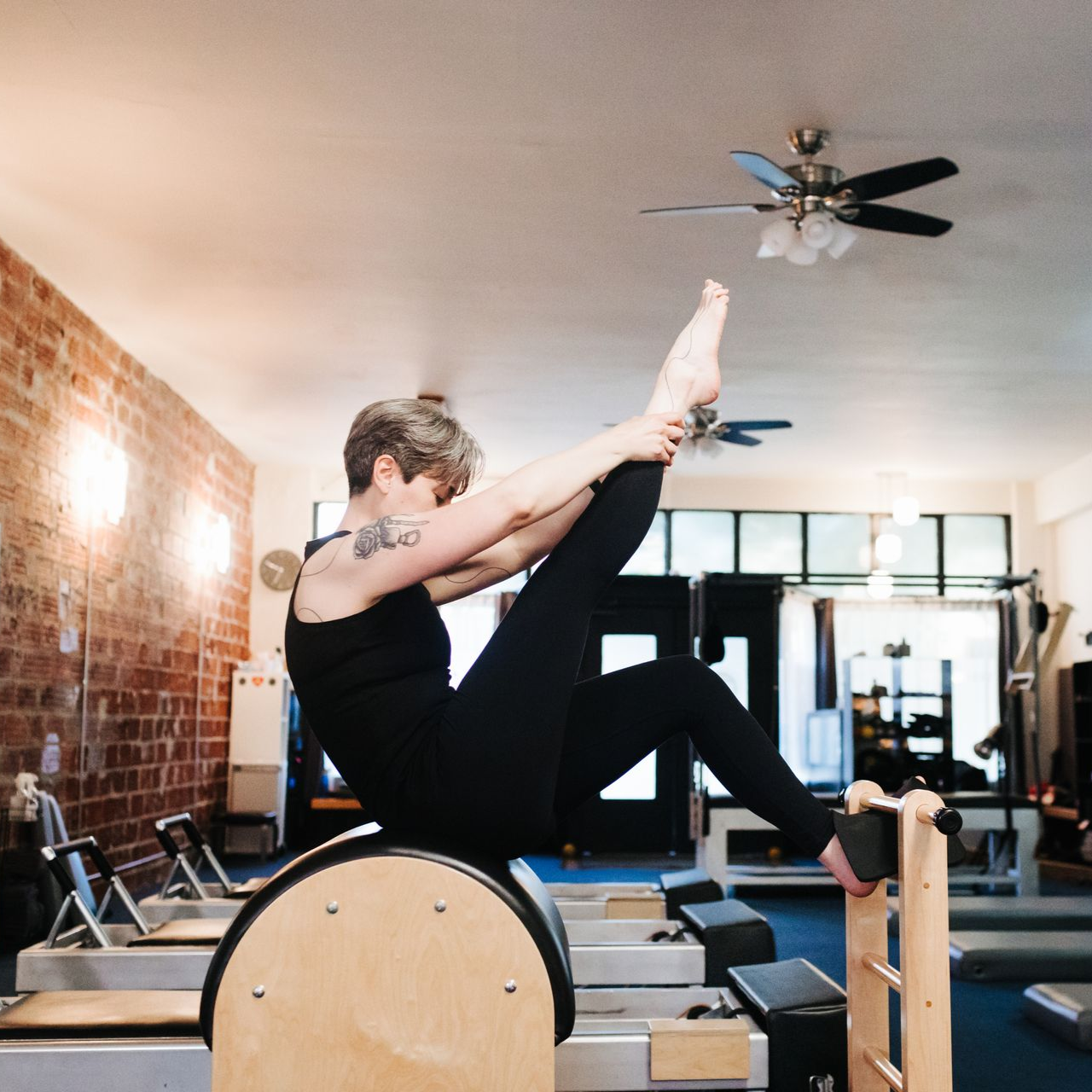
The Chairs require the body to manage spring resistance over a smaller base of support. They often make it immediately clear whether the movement is coming from the powerhouse or being forced through the arms and legs.
The Barrels provide shapes that support, open, or challenge the spine. Smaller apparatus may help clarify the work of the feet, ankles, neck, or breath while still connecting those areas back to the center.
The equipment changes, but the organizing principle remains.

The Limbs Belong to the Center
Centering does not mean ignoring the arms and legs.
The goal is to connect them more fully.
An arm does not simply reach from the shoulder. It connects through the back and into the powerhouse. A leg does not merely move from the hip joint. It reaches from the center through the seat, inner thigh, and foot.
This creates a longer and more integrated line of movement.
When the limbs lose their connection to the center, they may feel heavy or difficult to control. The shoulders and hip flexors may work excessively because the deeper support of the body is no longer participating.
When the connection improves, the limbs often feel lighter even though the exercise remains challenging.
Building the Powerhouse Through the System
The powerhouse is not built through one exercise or one type of abdominal contraction.
It develops through the entire Classical Pilates system.
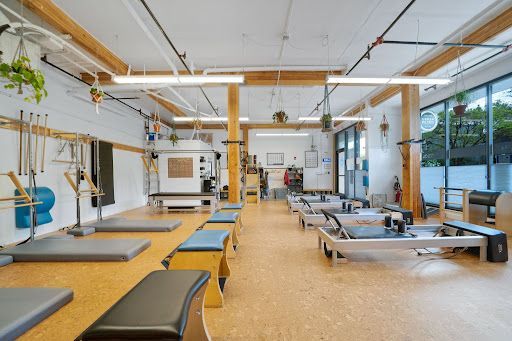
The Mat asks the body to organize itself against gravity without assistance from springs. The Reformer provides resistance and support while teaching control of a moving surface. The Cadillac, Chairs, Barrels, and smaller apparatus offer additional ways to strengthen, clarify, and challenge the center.
An exercise that is difficult in one place may become understandable in another.
For example, a student struggling to find lift in a Mat exercise may discover that connection through the support of the springs on the Cadillac. That new understanding can then be carried back to the Mat.
This is how the system educates the body. The apparatus does not replace the powerhouse. It helps the student find it.
The Center Is Not Static
The center of the body is not meant to remain motionless throughout every exercise.
In Rolling Like a Ball, the powerhouse maintains the shape while the entire body rolls. In the Roll Up, the center helps articulate the spine one section at a time. In the Swan, the center supports extension without allowing the lower back to absorb the entire movement.
Centering therefore does not mean preventing movement in the trunk.
It means that movement of the trunk is purposeful, supported, and connected to the whole body.
Strength With Organization
A person can be physically strong and still have difficulty organizing movement from the powerhouse.
Pilates strength is not measured only by how much resistance can be overcome or how long a position can be held. It also includes coordination, timing, control, and the ability to distribute effort throughout the body.
The powerhouse creates this organization.
As it develops, exercises may feel more connected rather than simply more forceful. The student begins to understand how the center supports the extremities, how opposition creates length, and how strength can coexist with mobility.

Experience the Powerhouse
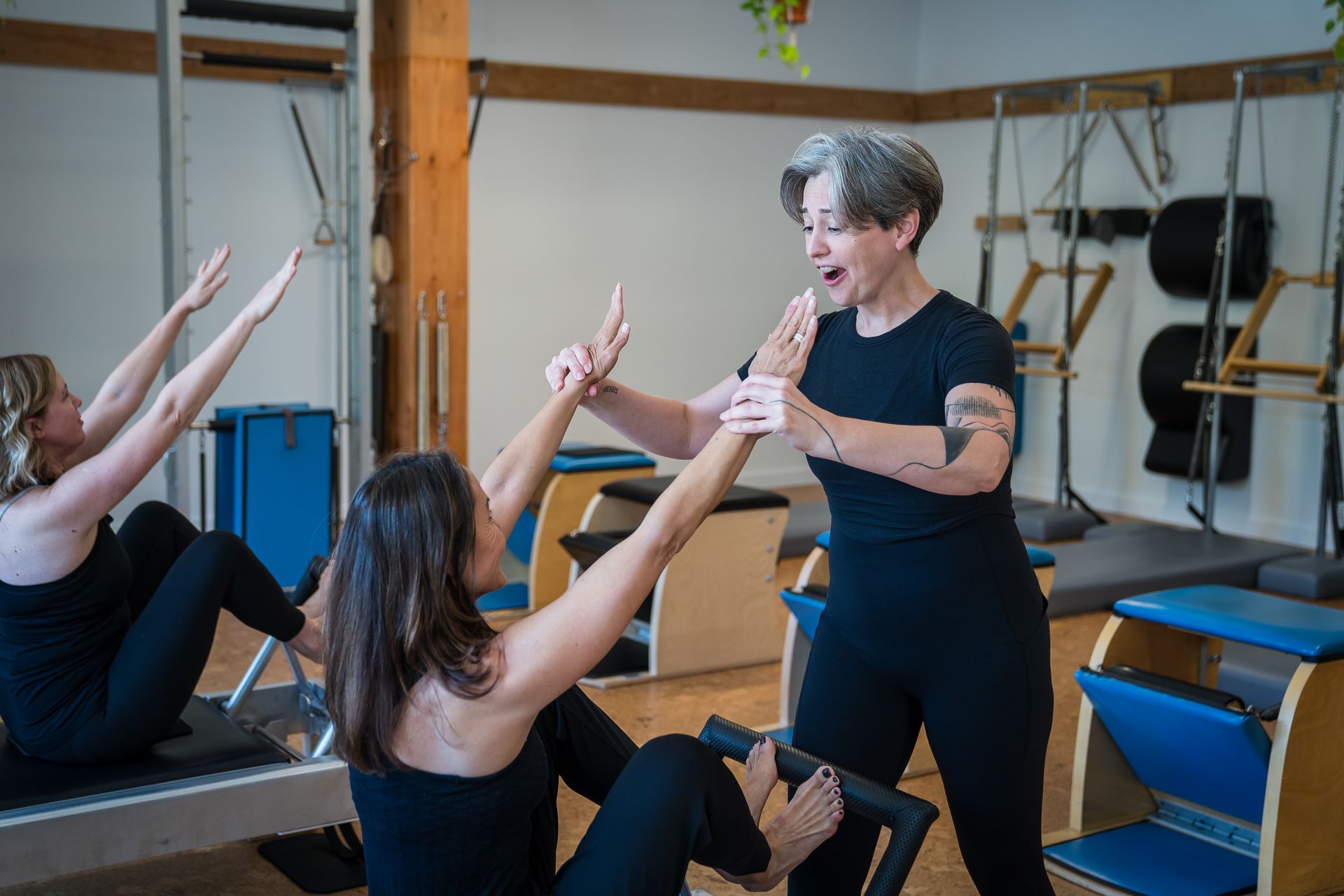
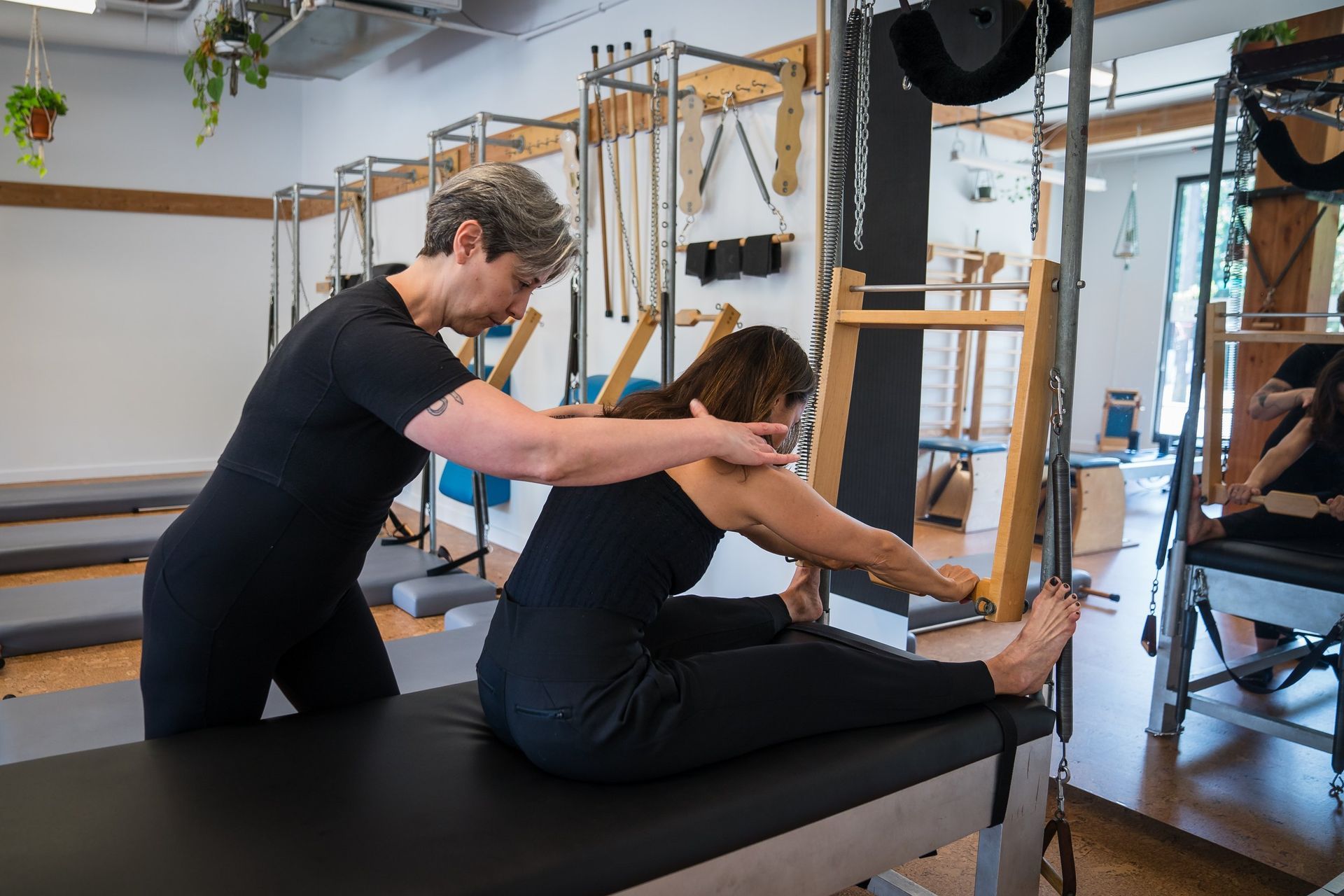
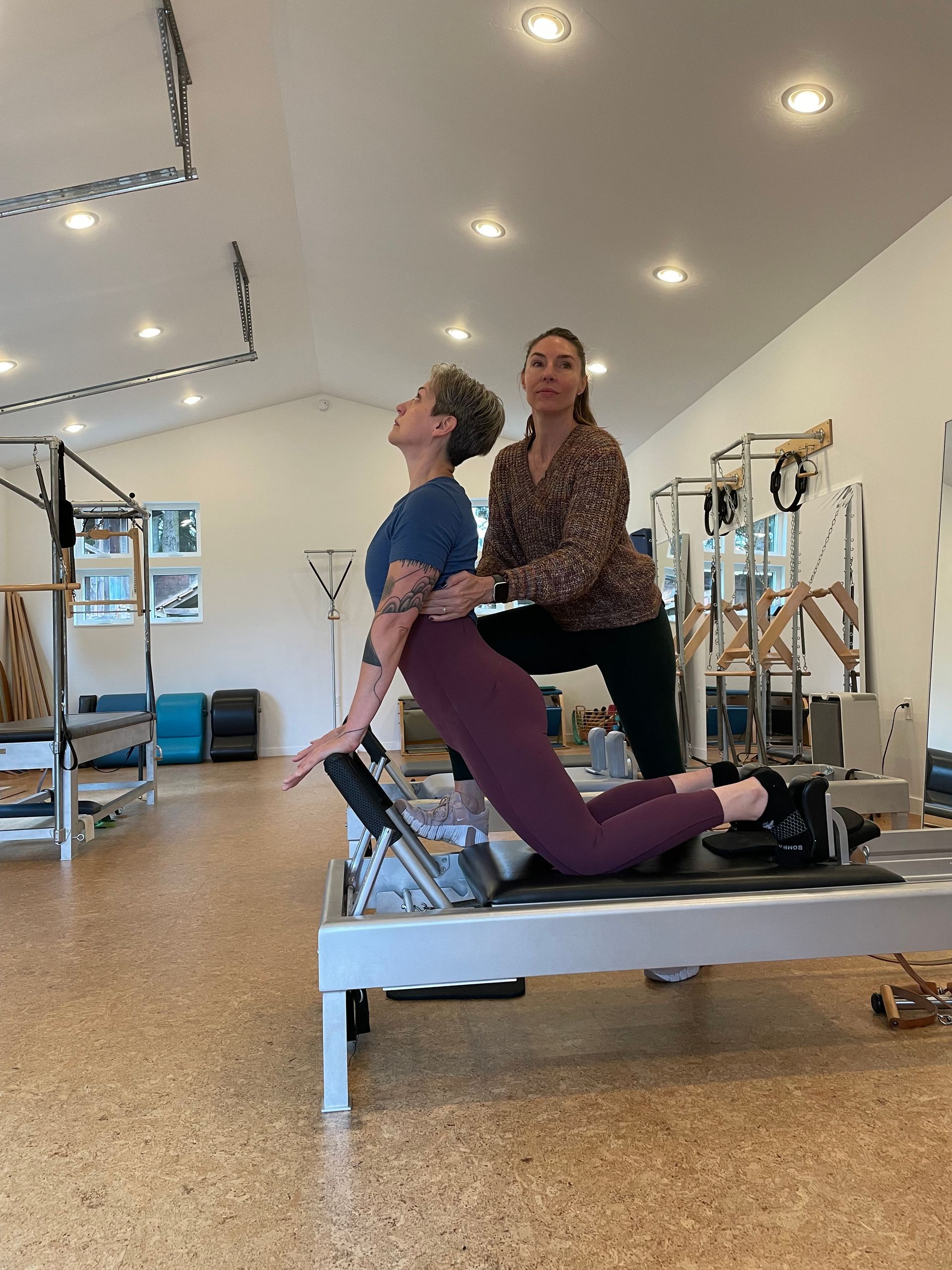
The powerhouse can be difficult to recognize at first because it is not one muscle or one sensation. Private instruction allows your teacher to observe how you organize movement and select the exercises and apparatus that make those connections easier to understand.
With guidance, you can begin to feel how the center supports the spine, connects the arms and legs, and creates strength without unnecessary tension. Over time, that awareness becomes something you can carry throughout the entire Classical Pilates system.
To explore centering within your own practice, schedule a session at urban-pilates.com/schedule or book through the Urban Pilates PDX app.
Recent Posts